Messenger : Text Messages
- 4.1
- Rating
- 1.00M
- Installs
- Free
- Price

 Analysis by App-foxy
If you are looking for a simpler way to handle everyday texting, Messenger : Text Messages is worth a careful look. I approached it as a replacement for the standard SMS app on an Android phone, and its appeal became clear quickly: it keeps the focus on conversations while adding themes and smart tools around the basic messaging experience. It is a free communication app from Messenger : Text Messages, rated for Everyone, with more than a million installs and a 4.3 average from roughly 7.2 thousand ratings.
That popularity does not automatically make it the right choice for everybody. In my experience, the app makes the most sense for someone who wants a more personal-looking SMS inbox without moving every conversation to a separate social network. It is less convincing for people who mainly need encrypted internet messaging, group collaboration, or a messaging service that works identically across several platforms.
What to expect before sending your first message
The important distinction is that this is an SMS-focused app rather than a replacement for every kind of messenger. Its central job is to help you read and send ordinary text messages, including when you are dealing with the practical limitations of mobile texting. The store summary also points to offline messaging, themes, and smart tools, so the experience is built around making routine conversations easier and more comfortable to use.
You May Also Like

 Blood Strike: 2.5 Anniversary
Blood Strike’s Loadouts Turn Every Drop Into a Tactical Gamble
A close look at Blood Strike’s custom loadouts: how fast access to signature weapons reshapes its battle royale rhythm, rewards preparation, and narrows the gap between fights.

 Pandora - Music & Podcasts
Pandora’s Music Is Easy to Start, but Harder to Recover
Pandora’s strength is its low-effort path from a seed to a station. Its weak spot is how much confidence it asks you to place in connection, setup, and quiet recovery.

 8 Ball Pool
 Is Built on Rivalries, Rematches, and Routine
A close look at the rivalries, rematches, shared routines, and unanswered safety questions that turn a quick pool match into a persistent mobile community.

 Samsung Music
’s Quiet Strength Is Playing What You Already Own
Its reach comes less from spectacle than from dependable access to a personal library. That simplicity is both the app’s strongest retention engine and its ceiling.

 AccuWeather: Weather Radar
AccuWeather Review: A Quick, Clear Forecast for Everyday Decisions
For everyday plans, the best forecast is the one you can understand quickly. AccuWeather makes rain timing, radar, and local conditions easy to act on, with a few trade-offs.

 Hill Climb Racing
Why Hill Climb Racing Still Turns Crashes Into One More Run
A tiny car, a bumpy hill and one more upgrade: Hill Climb Racing keeps resurfacing because its simple chaos makes every near-miss feel personal.
More From Our News Desk



I would not install it expecting a full social platform. You should think of it as a different front end for texting: a place to browse conversations, write replies, and adjust the visual style to suit you. That narrower purpose is actually useful. If your current messaging app feels cluttered or visually dull, changing the app can make regular communication feel less mechanical without forcing your contacts to sign up for anything.
The first thing I noticed is how much the visual layer matters. Themes are not a substitute for useful messaging, but they can make a difference if you spend a lot of time in text conversations. A calmer appearance may help when you use the app for family messages, while a more expressive style can make a personal phone feel less generic. I see this as a comfort feature rather than a reason by itself to switch.
The app is free to install, although optional in-app purchases range from around four dollars to about thirty dollars per item. That means I would explore the free experience first instead of assuming that every visual or smart feature is included. The practical test is simple: can you read, compose, and send messages comfortably before paying for anything? If yes, the optional purchases are a choice rather than a barrier.
It runs on Android devices using version 8.0 or later, and the current version is 4.8. The developer is listed as Messenger : Text Messages. Those details matter if you are trying to install it on an older handset, because compatibility should be checked before you plan a complete switch from your existing messaging tool.
Who will get the most from it
I think this app is especially suitable for people who still use SMS regularly and want more control over the look and feel of their inbox. It can also suit a first-time smartphone user who prefers a straightforward place for text conversations rather than a feature-heavy social application. Someone who often sends short updates, appointment reminders, delivery instructions, or family check-ins may appreciate that the app stays close to those everyday needs.
It is less suitable if your communication revolves around high-resolution media, large group discussions, voice calls, or cross-device internet chats. In those cases, a dedicated internet messenger may be more capable. SMS also depends on the normal behavior of mobile texting, so installing a new interface does not transform it into a private, cloud-based chat service.
Setting it up without making the switch stressful
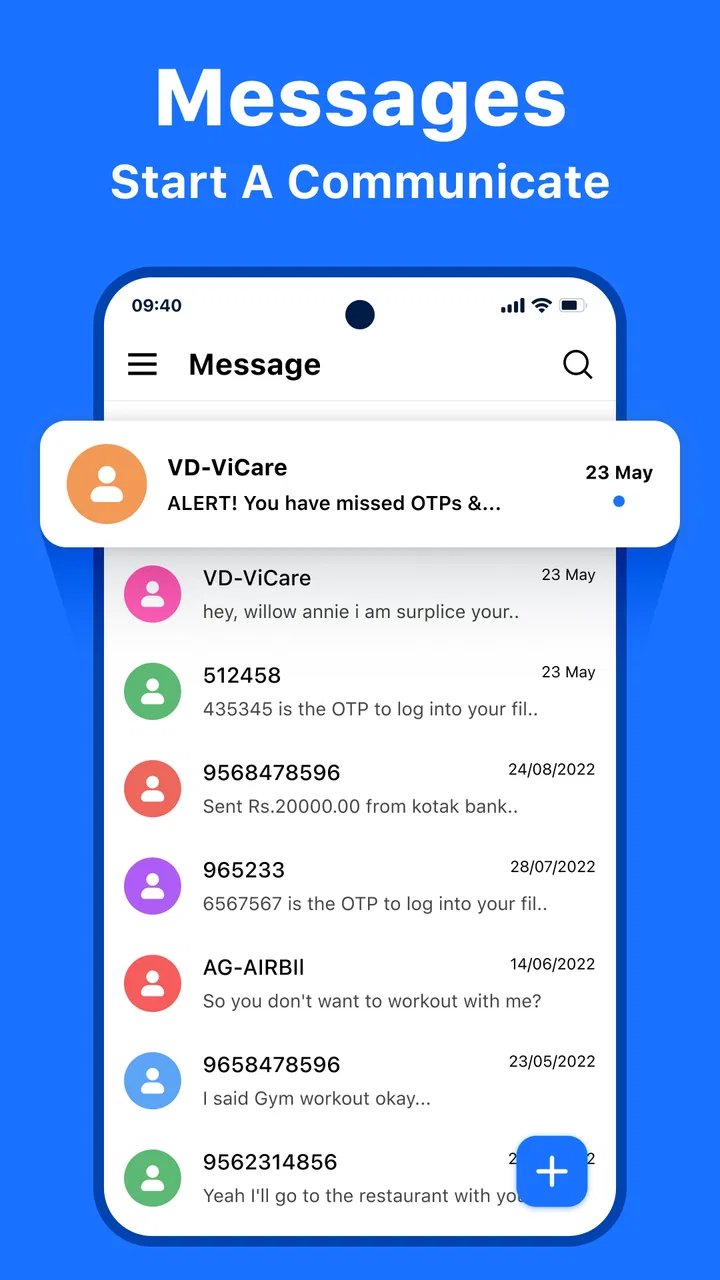
My advice is to install the app when you have a few quiet minutes rather than immediately before an important conversation. First, open it and look through the main conversation view. The goal is to understand where existing threads appear and where a new message begins. A familiar layout is more valuable than rushing through every customization option.
If Android asks you to make the app your default SMS application, read that prompt carefully. A messaging app generally needs to be the active handler if you want it to manage incoming and outgoing text conversations consistently. I would not treat the default-app choice as a permanent commitment, but I would make a note of where Android lets you change it later. That small bit of preparation prevents confusion if you decide to compare it with your previous app.
Next, spend a moment checking the conversation list before changing the theme. Look for the people you message most often and open one familiar thread. This gives you a useful baseline: you can see whether the history is easy to follow, whether the compose area feels natural, and whether the controls are placed where your fingers expect them.
Only after that would I personalize the appearance. Themes are more useful when you choose one that improves readability rather than simply looking dramatic. A highly decorative design may be enjoyable at first but tiring during long conversations. I prefer to test a theme with both a short reply and a longer message, because text spacing and contrast matter more than a quick glance suggests.
A helpful setup habit is to keep your first message deliberately unimportant. Send a short text to a trusted contact, or use a routine conversation where a test reply will not cause trouble. This lets you confirm that the app is handling your normal texting flow before you depend on it for an urgent message.
Finding the first meaningful success
For a first-time user, the best early milestone is not changing every setting. It is completing one ordinary conversation from beginning to end: open an existing thread, write a clear reply, send it, and return to the inbox. If that sequence feels natural, you already know whether the app is a practical fit.
I recommend starting with a conversation you recognize immediately. That makes it easier to judge whether the message history is organized in a way that works for you. Pay attention to the small actions: how quickly you can locate the compose control, whether the keyboard opens at the right time, and whether sent and received messages are visually distinct enough to scan without effort.
The offline messaging emphasis is also worth understanding in real life. There are moments when an internet-based chat service is not the most dependable option, while ordinary texting remains the channel people around you already know how to use. For example, imagine leaving work and needing to tell a family member that your arrival has changed. You open a familiar thread, send a short update through the SMS workflow, and do not need to persuade that person to install the same social app.
That scenario shows the app’s strongest practical advantage: it can make an existing communication habit easier without requiring a new network. The success is not flashy. It is the reduction of steps between noticing something and sending a useful message.
One non-obvious tip is to judge the app during a busy day rather than during a calm setup session. A messaging interface can look excellent when you have only one conversation open, then become harder to navigate when several people reply close together. Check whether you can distinguish personal, practical, and group threads at a glance. If the inbox remains clear under pressure, the design is doing real work.
Another useful workflow is to choose a theme after considering where you usually text. If you often message outdoors, readability should lead the decision. If you text late at night, a less visually intense style may feel more comfortable. This is a small trade-off, but it is more meaningful than picking a theme solely from its preview.
Common points of confusion
The biggest source of uncertainty for new users is the difference between an SMS application and an internet messaging service. Installing this app does not mean every person you contact automatically gains access to its themes or smart tools. Your recipient’s experience depends on the messaging method and the app they use. I would explain this to family members who assume that a new texting app creates a shared chat environment.
Another point is the default SMS role. If you switch between messaging apps without checking which one is active, you may wonder why new messages appear in one place while older conversations seem easier to find in another. The safest approach is to choose one main app, use it for a few days, and only then compare alternatives. Constantly switching makes it difficult to tell whether a problem comes from the app or from the phone’s current configuration.
Offline messaging can also be misunderstood. I read that phrase as a benefit for SMS-style communication, not as a promise that every modern chat function works without a connection. If you need internet-based media sharing or synchronized conversations across devices, you should compare the app with a service designed around those functions instead of assuming the offline emphasis covers them.
The optional purchases deserve a realistic look as well. A free download is helpful for testing, but the presence of purchases means some users may encounter paid choices while exploring the app. I would avoid buying anything during the first few minutes. Use the basic messaging flow, decide whether the visual changes genuinely improve daily use, and then consider whether an optional item is worth the cost to you.
There is also a privacy-related judgment that each user should make for themselves. SMS is convenient because it is widely supported, but convenience and privacy are not the same thing. If your conversations involve sensitive information and you specifically want strong end-to-end protection, I would choose a service built around that purpose rather than relying on a themed SMS interface.
One practical limitation is that customization can become a distraction. It is easy to spend more time browsing styles than deciding whether the inbox is actually easier to use. My rule is to return to the first successful action: if the theme makes reading and replying more comfortable, keep it; if it merely looks different, change it back or move on.
How it compares with the usual alternatives
Compared with the default SMS app that comes with an Android phone, Messenger : Text Messages is most appealing when appearance and extra convenience matter to you. The built-in option may feel more predictable because it is already integrated into the phone, while this app offers a reason to personalize the experience. The trade-off is that a third-party replacement adds another layer to evaluate, especially when deciding which app should handle texting by default.
Compared with internet-first services, its advantage is reach. You can use the familiar SMS route with people who do not share your preferred chat platform. The disadvantage is that SMS is not the strongest environment for rich media, advanced collaboration, or a unified conversation history across multiple devices. I would pick this app for practical text communication and pick an internet messenger when the conversation needs more than text.
Compared with a very minimal messaging tool, this app gives you more room to adjust the experience through themes and smart tools. That can help someone who finds plain interfaces uninspiring. However, users who value absolute simplicity may prefer the smaller number of choices in a basic built-in app. More options are only useful when they solve a problem you actually have.
The app’s 4.3 average from about 7.2 thousand ratings suggests that many users find the overall experience worthwhile, while the roughly 287 written reviews offer a smaller body of detailed feedback to consider. I would treat those figures as a useful sign of adoption, not as a substitute for testing the app on your own phone and messaging habits.
What I would do after the first day
Once the first conversation works, I would not immediately migrate every messaging habit. I would use the app for ordinary replies, then test a few different situations: sending a short practical update, opening an older thread, handling several conversations in succession, and changing the theme once. These tests reveal more than a feature tour because they reflect how texting actually fits into a day.
I would also decide whether the app is solving a specific irritation. Perhaps the default inbox feels too plain, perhaps you want a more comfortable visual style, or perhaps you prefer a dedicated SMS space instead of a broader communications platform. Naming that reason helps you avoid paying for customization that does not improve your routine.
For families and less technical users, the strongest recommendation is to keep the workflow simple. Choose one readable theme, identify the new-message control, and practice with a familiar contact. For experienced users, the more important check is whether the app’s organization and smart tools save time without adding visual noise.
My final view is positive but specific. This is a practical choice for people who want a more personal SMS experience, not a universal replacement for every messaging service. The free entry point makes it easy to try, the Everyone rating keeps it broadly approachable, and the combination of texting, themes, offline-oriented use, and smart tools gives it a clear identity.
I would recommend it to a friend who sends regular text messages and wants the inbox to feel more comfortable or distinctive. I would tell someone who needs encrypted chats, extensive media features, or seamless multi-device messaging to choose a different category of app. Start with one familiar conversation, confirm that sending and receiving feel dependable, and only then explore the optional customization. That path gives you a meaningful answer quickly without turning setup into a project.
FAQs for Messenger : Text Messages
01What features does Messenger: Text Messages offer?
Messenger: Text Messages provides a comprehensive suite of features including instant messaging, multimedia sharing, voice and video calling, and group chats. It also supports emojis, stickers, and GIFs to enhance communication. Users can customize notifications, themes, and chat backgrounds to personalize their experience.
02Is Messenger: Text Messages secure?
Messenger: Text Messages employs end-to-end encryption to ensure user conversations remain private and secure. However, users should be cautious about sharing sensitive information and regularly update the app to benefit from the latest security patches and features.
03Can I use Messenger: Text Messages without an internet connection?
Messenger: Text Messages requires an internet connection to send and receive messages, whether through Wi-Fi or mobile data. However, once messages are downloaded, you can access them offline. Some features, such as video calling, will not function without internet connectivity.
04How does Messenger: Text Messages handle data usage?
Messenger: Text Messages is designed to be efficient in data usage, but video and voice calls, as well as sharing large media files, can consume more data. Users can manage their data usage by adjusting settings to download media only when connected to Wi-Fi.
05Is Messenger: Text Messages free to use?
Messenger: Text Messages is free to download and use for sending messages and making calls. However, it may offer in-app purchases for additional features or premium content. Users should check for any potential costs associated with data usage, especially when using mobile data.
Pros
- User-friendly interface for easy navigation.
- Supports multimedia sharing seamlessly.
- Customizable chat themes.
- Instant notifications for new messages.
- Cross-platform compatibility.
Cons
- Requires constant internet connection.
- Lacks end-to-end encryption by default.
- High battery consumption.
- Frequent app updates needed.
- Limited privacy settings.

Messenger : Text Messages
Gallery